Be the first to know
Subscribe to receive weekly updates of upcoming events.


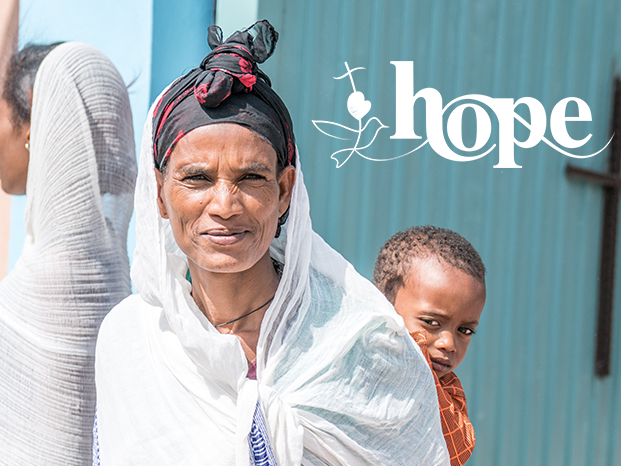
Experience a Century of Mission Through the Lens of Hope To celebrate 100 years of World Mission Sunday, Catholic Mission invites you to experience Hope, a unique photography exhibition capturing […]

Pope Leo XIV has decreed 2026 a SPECIAL JUBILEE YEAR OF SAINT FRANCIS. This is an ideal time to come to know Saint Francis of Assisi more intimately through a […]

Join academic leaders, educators, healthcare professionals, and advocates from across Aotearoa, the Pacific and beyond for the Catherine McAuley Symposium, to be held in Wellington, New Zealand on 13–15 December […]
The Eucharist is the central Christian ritual celebrated in response to Christ’s command to: “Do this in remembrance of me”. The basic shape of the Eucharistic celebration has remained unchanged throughout history despite the evolution of liturgical diversity in different cultural contexts, languages, and ecclesial circumstances. This unit studies the Eucharist as an act of thanksgiving and praise, “a sacrificial memorial of Christ and his body, and the presence of Christ by the power of his word and of his Spirit.” (CCC#1358).
Closing date for professional learning registrations is 29 June.
The unit will explore the anthropological and biblical roots of the Eucharist and will trace its major theological themes including Eucharist as participation in the Paschal Mystery, and as sacrifice, presence, communion, blessing and devotion. Studying the liturgical sources and practices of the Church, this unit explores the historical and theological evolution of the Eucharist in a range of Christian traditions and time-periods. It attends especially to the current form of the rite in the Roman Catholic tradition, paying attention to key ecclesiastical legislation pertaining to the celebration of the Eucharist and articulating a theology of the rite drawing on the liturgy itself. This unit aims to provide students with an appreciation of the complex historical evolution, liturgical diversity and theological richness of the sacrament of the Eucharist, in order to enhance their understanding of why its proper ritual celebration today is central to the identity and mission of the Catholic Church.
For general education, faith formation, professional learning, and in preparation for the International Eucharistic Congress to be held in Sydney in 2028, clergy, teachers, pastoral associates, youth ministers, family faith educators, parishioners and all who have an interest in all aspects of the Eucharist are welcome to register for this professional learning seminar (not for academic credit with no assessments) which is also being offered as a postgraduate unit (for academic credit or audit). This rich learning opportunity will provide you with access to your choice of 12 learning hours drawn from the unit’s lectures and special sessions. Additional hours may also be selected beyond the minimum.